%20(1)%20(1)-1%20(1)-1-400x280.webp)
Learn to Ride a Bike: How to Teach Your Child Without Training Wheels
Help your child learn to ride a bike without training wheels using simple steps, safety tips, games, and confidence-building advice for parents.
Watching your child learn to ride a bike is one of those parenting moments that sticks. There’s the wobble, the deep breath, your hand on the back of the seat… and then, suddenly, they’re off. As camp directors and teachers at Rouge Camps summer day camps, we’ve coached many kids through those first “no training wheels” rides, and we know it can feel just as nerve‑racking for parents as it does for kids.
This guide walks you through when kids are usually ready, a simple step‑by‑step method, and how to keep things safe and fun. We’ll also share how the right summer program or bike camp for kids can back you up if you’d like some extra help.
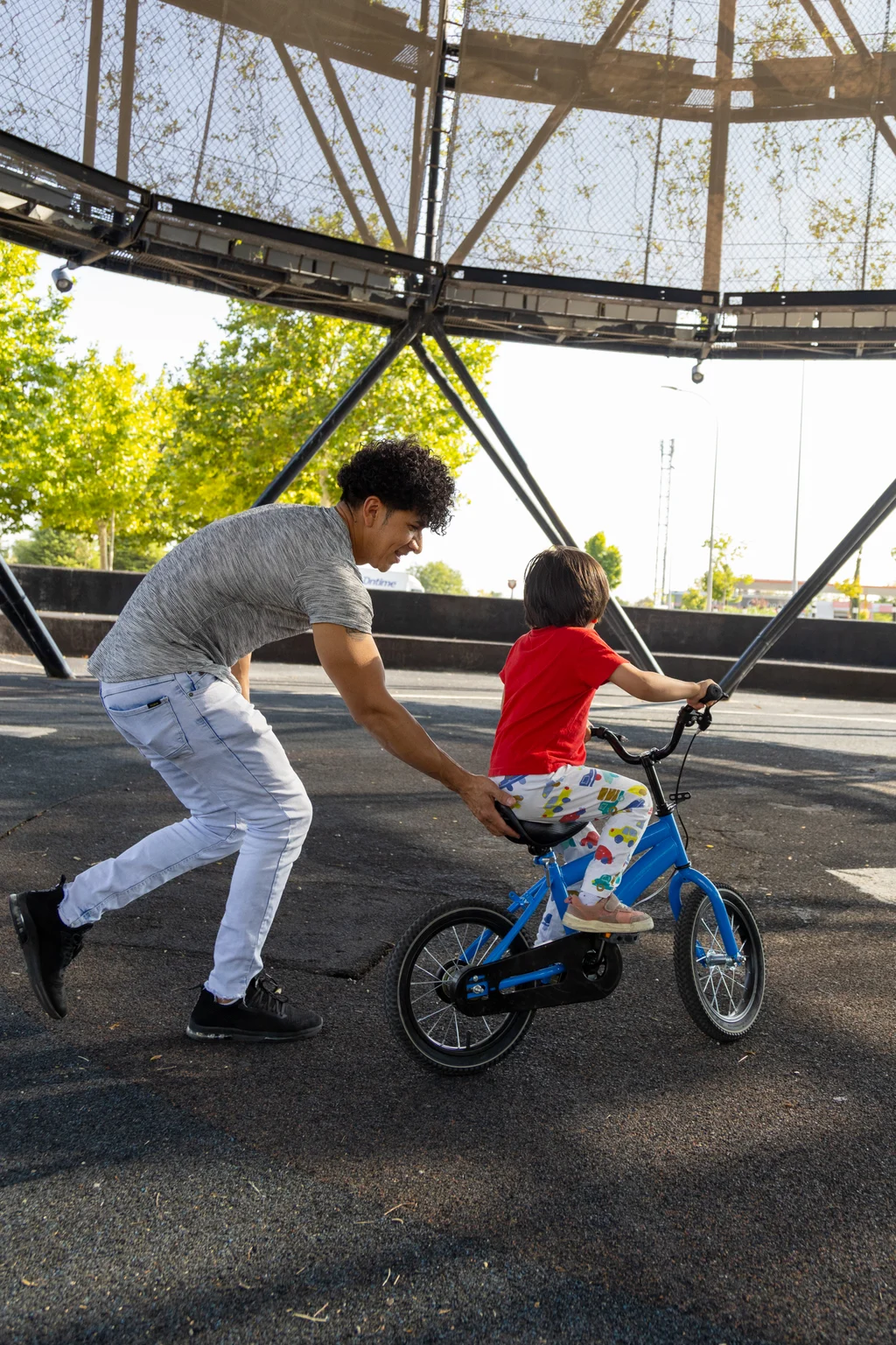
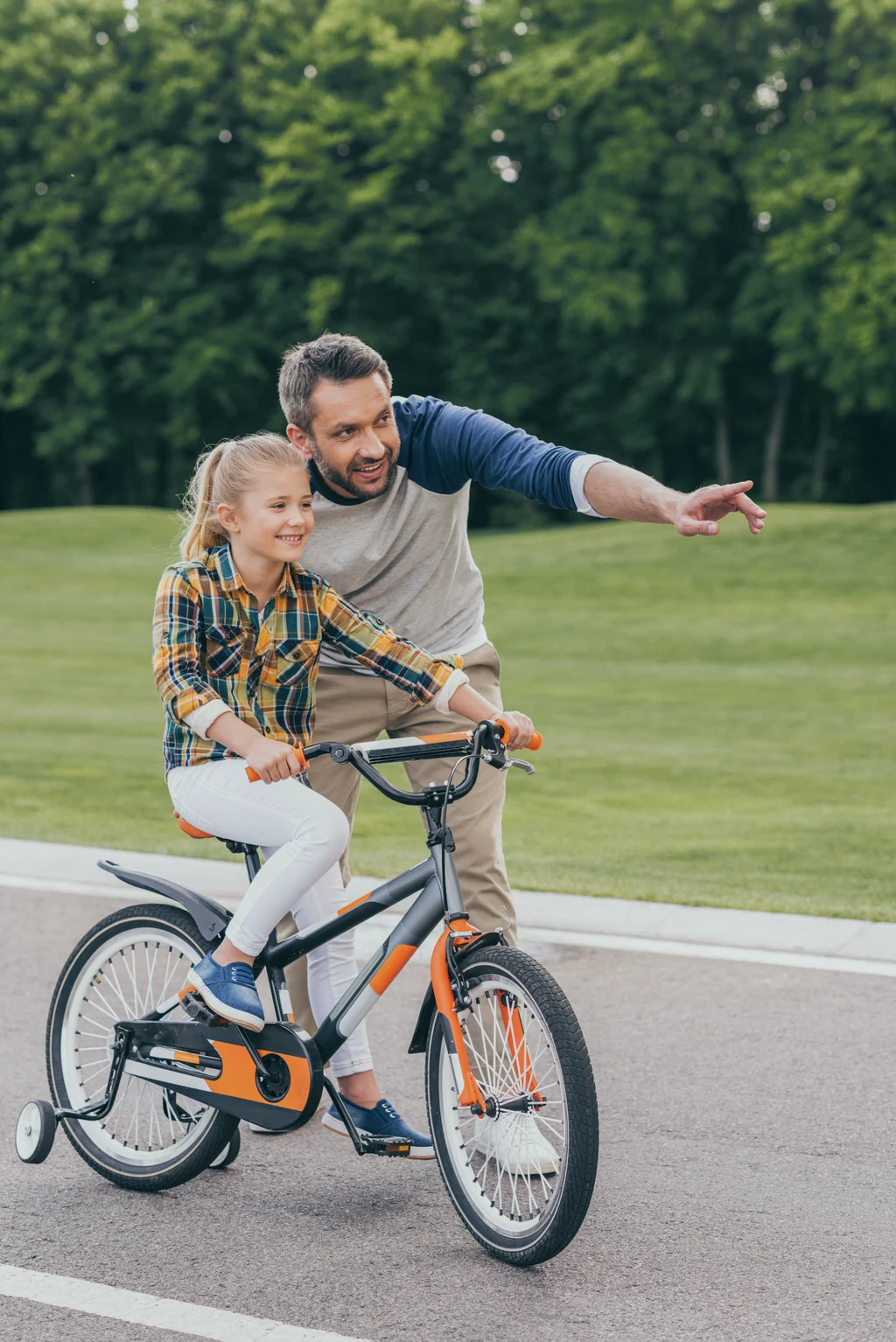 A parent supporting a child through those first “no training wheels” rides.
TL;DR: A quick guide for busy evenings
- Most kids are ready to ride between ages 4–8, but readiness matters more than age.
- Start with balance: low seat, feet on the ground, coasting before pedalling.
- Keep sessions short (10–20 minutes) and end on a win, even a tiny one.
- Helmets every single time, plus a quiet, open space away from traffic.
- Look for the best summer camp or bike‑friendly program if your child needs extra practice and positive coaching.
Table of Contents
- When do kids learn to ride a bike?
- A simple 3‑step plan to help your child learn to ride a bike
- Safety checklist before every ride
- Handling nerves, falls, and frustration
- Games that make practice fun
- How the best summer camp or bike camp for kids can help
- Learn to ride FAQ
- Key takeaways for tired-but-determined parents
When do kids learn to ride a bike?
Parents often ask, “When do kids learn to ride a bike?” The short answer: many kids get there somewhere between ages 4 and 8, but the range is wide and perfectly normal. Guidance from pediatric organizations such as Nationwide Children's Hospital notes that most children develop the coordination, agility, and balance to ride without training wheels sometime in that 4–8 window, though some are ready a little earlier and others later. What matters most is not the birthday on the calendar, but a few readiness signs.
Look for these clues that your child is ready to ride without training wheels:
- They can scoot confidently on a balance bike or scooter.
- They can start and stop on their own with training wheels on.
- They’re comfortable following simple instructions like “look ahead” and “brake here.”
- They show at least a little curiosity about riding “like the big kids.”
If your child isn’t there yet, that’s okay. Spend time on balance bikes, playground climbing, and other gross‑motor play. If you’re planning your summer schedule, this is also a great time to explore our camp and child development blog, especially if you’d like extra support with confidence and coordination.
A simple 3‑step plan to help your child learn to ride a bike
At camp we use a “Ready, Steady, Pedal” approach, a simple three‑step method we’ve refined over years of teaching first‑time riders at Rouge Camps. It keeps things simple for kids and for the grown‑ups doing the cheering.
Step 1: Ready – set up the bike and gear
Get the bike size, seat height, helmet, and practice area right so your child feels safe and in control.
- Pick the right size bike. Your child should be able to sit on the seat with both feet flat on the ground.
- Lower the seat. For learning, drop the seat a bit more than usual. Kids feel safer when they know they can plant their feet anytime.
- Helmet check. Use a CSA‑approved helmet, level on the head, two fingers above the eyebrows, snug straps under the chin. Groups like Parachute Canada and the Canadian Paediatric Society share clear fitting tips.
- Choose the right spot. A flat, open area such as an empty tennis court, schoolyard, or quiet cul‑de‑sac works well. Skip hills, gravel, and busy driveways.
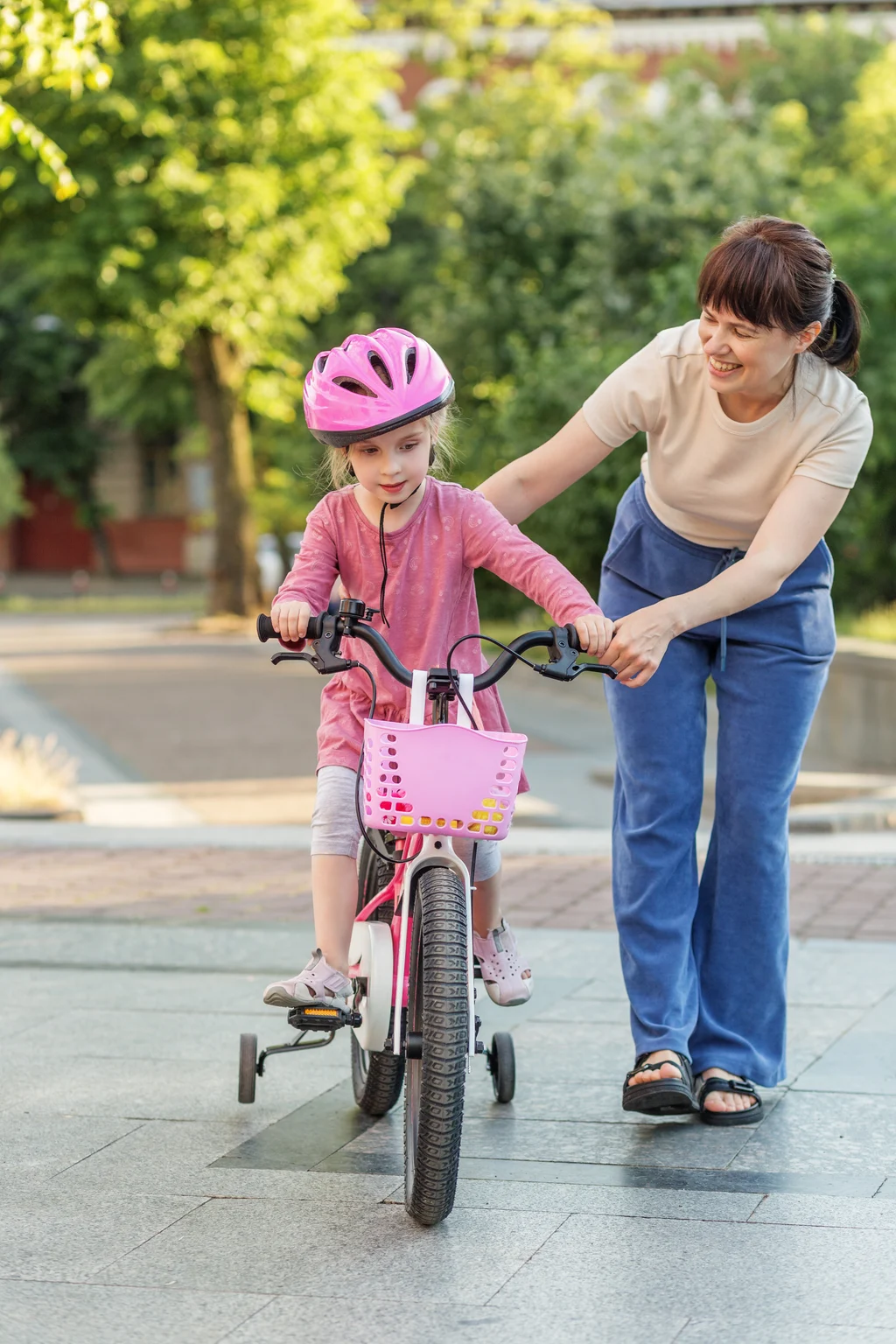 Setting up the bike and helmet correctly helps kids feel safe from the start.
Step 2: Steady – build balance without training wheels
Help your child master balance and steering by gliding like a balance bike before you worry about pedalling.
For many kids, the fastest way to learn to ride a bike is to focus on balance first, just like a balance bike. You can even remove the pedals for this stage.
- Have your child sit on the bike, hands on the handlebars, feet flat on the ground.
- Ask them to “walk” the bike forward, then take slightly bigger steps.
- Next, challenge them to lift their feet and glide for 2–3 seconds, then 4–5 seconds.
- Turn it into a game: “Can you glide to the line?” or “Can you coast past this cone?”
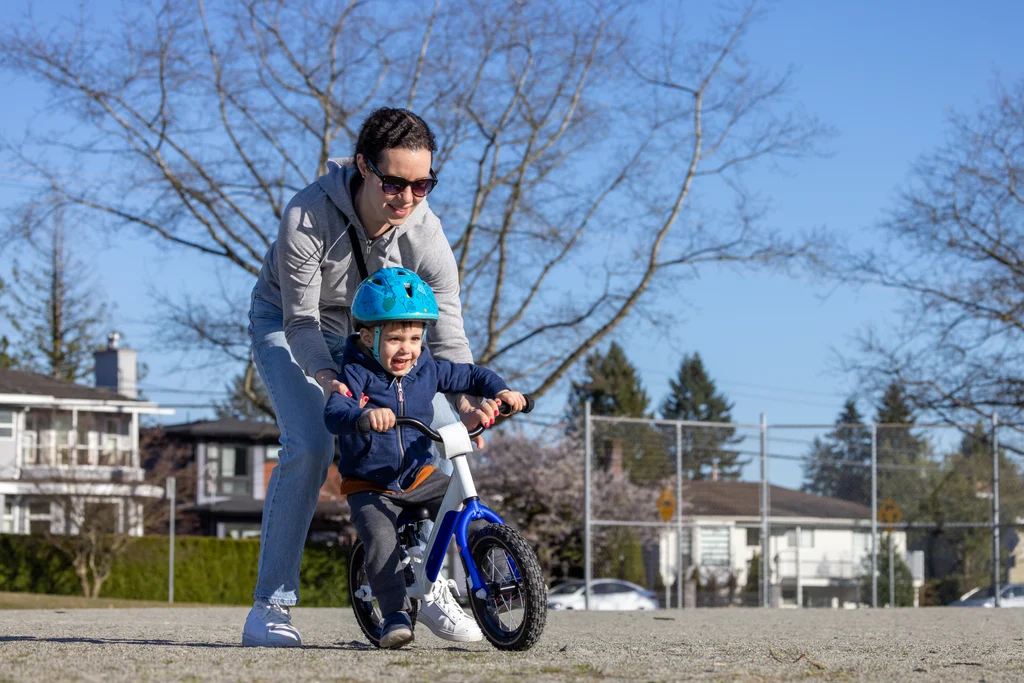 Gliding on a flat court builds balance and steering before you add pedalling.
“The goal of the first few rides isn’t distance; it’s a smile at the end.”
Step 3: Pedal – put it all together
Once they can glide smoothly, bring the pedals back, support lightly, and coach them to start, steer, and stop on their own.
Once your child can glide comfortably, it’s time to bring the pedals back on.
- Show them the “power pedal” position: one pedal at about two o’clock, ready to push down hard.
- Stand beside them and place a hand lightly on their back or under one arm, not on the handlebars.
- Count down: “3, 2, 1, push!” as they press the power pedal and start rolling.
- Encourage them to look where they want to go, not at their front wheel.
- Let your support get lighter and lighter until your hand is just hovering.
Keep these first pedalling sessions short, about 10–15 minutes, then stop for a snack, a stretch, or a different activity. Many of our Rouge Camps families tell us that short, regular sessions fit nicely around camp days at our locations in Unionville, Richmond Hill/Maple, and Woodbridge during the summer.
Safety checklist before every ride
A few quick checks can make those first rides much safer and far less stressful. In Ontario, kids under 18 must wear a helmet by law, and provincial guidelines are a helpful reference.
- Helmet on, straps snug. No loose chin straps or backward helmets “because it looks cool.”
- Closed‑toe shoes. Runners with laces tied or Velcro secured.
- Quick bike check. Squeeze the brakes, check that the tires feel firm, and make sure the chain is on.
- Clear space. No parked cars nearby, no steep slopes, and no tiny siblings darting through the practice zone.
- Simple rules. Even off the road, talk about stopping at driveways, looking both ways, and listening for cars.
At camp we talk a lot about “playing hard and finishing the day safe.” The same idea works beautifully at home when kids learn to ride.
Handling nerves, falls, and frustration
Some kids hop on and never look back. Others feel nervous for weeks, especially if they’ve had a fall, a pushy older sibling, or just a strong streak of caution. All of these reactions are normal.
What to say when your child is scared
- Normalize their feelings: “Lots of kids feel wobbly at first. That doesn’t mean you can’t do it.”
- Focus on progress, not perfection: “Yesterday you could glide for two seconds. Today you did five.”
- Offer choices: “Do you want to practise starts, or just gliding?” Giving kids a say often lowers anxiety.
At camp, we see this all the time. One camper last summer, let’s call her “M.”, arrived too nervous to sit on the bike. On day one she only walked beside it; by mid‑week she was happily gliding for a few seconds at a time, and by Friday she was pedalling the length of the court using short “Ready, Steady, Pedal” sessions and lots of encouragement. That kind of slow‑and‑steady progress is very typical.
How long does it take to learn to ride a bike?
Some children figure it out in a single afternoon; others need many shorter sessions spread over days or weeks. If your child is melting down or your own patience is wearing thin, that’s a sign to call it for the day. Head to the park, play a game, or check out some of our active summer camp programs where counsellors can help channel that energy in a positive way.
Games that make practice fun
At Rouge Camps we build games into almost everything we teach, because kids learn best when they’re having fun. Here are a few bike‑friendly ideas you can try in a schoolyard or quiet court.
- Line glides. Draw a chalk line and challenge your child to glide along it without putting their feet down. Make the line longer as they improve.
- Red light, green light. Call “green light” for pedalling and “red light” for braking and putting feet down. This builds strong, quick stops.
- Cones and curves. Set up a simple obstacle course with gentle turns, using cones or water bottles. Time them and let them try to “beat their score” safely.
- Follow the leader. Ride alongside (or jog, if you don’t have your bike handy) and let your child follow your path around the court.
 Simple cone courses and games keep bike practice playful and confidence‑building.
These same principles, short, fun bursts of skill work, are built into our multi‑sport Sports Camp days, where kids practise coordination, balance, and confidence that all carry over when they learn to ride a bike. That kind of regular movement also lines up with guidelines from organizations like the World Health Organization and Canada’s 24‑Hour Movement Guidelines, which recommend that children and youth aged 5–17 accumulate at least 60 minutes of moderate‑to‑vigorous physical activity each day to support healthy bodies and motor skills.
How the best summer camp or bike camp for kids can help
Not every parent has the time, space, or energy to teach every skill themselves, and that’s okay. The right program can be a powerful partner as your child learns to ride and stays active all summer.
Here’s what to look for in the best summer camp or bike camp for kids:
- Small groups and patient instructors who understand that confidence grows at different speeds.
- A focus on safety— helmets, clear rules, and well‑supervised spaces.
- Plenty of daily movement so kids build leg strength, balance, and body awareness.
- Positive culture where effort is celebrated as much as “winning.”
At Rouge Camps, our Ontario‑certified teacher directors and trained counsellors build these elements into every week of camp, whether kids are starting sports, trying robotics, or stepping into leadership programs. Many families tell us that a few weeks of structured, active days at camp mean their child comes home more confident and ready for challenges, on the bike and beyond.
If you’re in Markham, Unionville, Richmond Hill/Maple, or Woodbridge, you can register for Rouge Camps and pair your at‑home bike practice with a full summer of movement, friends, and outdoor play.
Key takeaways for tired-but-determined parents
- There’s no magic age; watch for readiness signs rather than comparing your child to others.
- Use the “Ready, Steady, Pedal” framework: gear up, build balance, then add pedalling.
- Keep safety simple and consistent: helmet, safe space, quick bike check, clear rules.
- Turn practice into play with games, races against the clock, and silly challenges.
- Lean on community resources, teacher‑led camps, local programs, and trusted guides, when you need backup.
One day soon, you’ll jog beside that little bike, feel your child pull ahead, and realize your hand isn’t on the seat anymore. Whether that moment comes this week or next summer, you’ll know you helped them get there, steady, proud, and rolling under their own power.
FAQs
When do kids usually learn to ride a bike?
Most kids learn to ride a bike between ages 4 and 8, but readiness matters more than age. If your child can balance, follow simple instructions, start and stop with support, and shows interest in riding, they may be ready to try without training wheels.
What is the easiest way to teach a child to ride without training wheels?
Start with balance before pedalling. Lower the seat so your child can place both feet flat on the ground, let them walk the bike forward, then practise short glides. Once they can coast confidently, add the pedals back and help them practise starting, steering, and stopping.
Are balance bikes better than training wheels?
Balance bikes often help kids learn faster because they teach balance, steering, and confidence from the start. Training wheels can feel safe, but they don’t teach kids how to lean, correct wobbles, or balance on their own.
How long does it take a child to learn to ride a bike?
Some children learn in one afternoon, while others need several short practice sessions over days or weeks. The best approach is to keep practice short, positive, and pressure-free so your child builds confidence instead of frustration.
What should my child wear when learning to ride a bike?
Your child should always wear a properly fitted helmet, closed-toe shoes, and comfortable clothing that will not get caught in the chain or pedals. Practise in a flat, quiet, open space away from traffic, parked cars, gravel, and steep hills.
Can summer camp help kids learn to ride a bike?
Yes. A bike camp or active summer camp in Richmond Hill Ontario can help kids build balance, coordination, confidence, and independence with support from patient instructors. For some children, learning with other kids in a fun, structured environment makes bike riding feel less scary and more exciting.
Is a balance bike better than training wheels?
Balance bikes teach kids to steer and glide from day one, so many children who start on them transition to pedalling more quickly. Training wheels can feel safer at first, but they keep the bike upright for your child, so they don’t learn to lean into turns or correct small wobbles. If you already own a pedal bike, you can mimic a balance bike by lowering the seat and removing the pedals for a few sessions.
How often should my child practise?
Short, regular practice works best for most families. Aim for 10–20 minutes, two to four times per week, instead of one long, tiring session on the weekend. This keeps frustration low and gives your child’s muscles and balance time to adapt between rides. If either of you feels worn out, take a break and come back fresh another day.
What if my child is older and still can’t ride?
It is never “too late” to learn to ride a bike. Many children learn at 9, 10, or even in their early teens, especially if they’ve been focused on other activities or felt anxious after a fall. Older beginners often pick up the skills quickly once they have patient coaching, a quiet space to practise, and a plan that breaks things into manageable steps.
Should we keep using training wheels once my child starts pedalling?
If your child is confidently gliding and starting to pedal, you can begin to phase out training wheels or skip them completely. Leaving them on too long can actually make turns feel strange, because the bike stays stiff and upright. Instead, stay close by for support, use gentle slopes only when they are ready, and celebrate small wins like starting on their own or making a smooth stop.