%20(1)%20(1)-1%20(1)-1-400x280.webp)
The Benefits of Outdoor Learning for Elementary Students
Discover the benefits of outdoor learning activities for elementary students and young kids, including fun ideas that build confidence and focus.
By the time many elementary students get home from school, they’ve spent most of the day sitting: at a desk, in the car, at the kitchen table. No wonder they’re wriggly. Parents often sense that their kids come alive when they step outside, but it can be hard to put into words why that time outdoors matters so much for their growth. In this article, we’ll look at what outdoor learning really looks like in everyday life, how it supports your child’s body, brain and confidence, and why high-quality summer camps can be one of the easiest ways to build more of it into your family’s routine.
TL;DR: Why time outside helps your elementary student thrive
- Regular learning outside helps kids move more, calm their nervous systems, and come back inside ready to focus.
- Simple outdoor learning activities at home, and in early childhood, including outdoor learning activities for 3-5 year olds, build curiosity, resilience, and independence.
- Choosing a teacher-led Unionville summer camp or other summer camps for 4 year olds gives young children safe, structured outdoor play all day long.
Ready to give your child more time to explore outside this summer? Explore Rouge Camps day camps across York Region.
Table of contents
- Why outdoor learning matters for elementary students
- Key benefits you’ll notice at home
- Outdoor learning activities teachers and parents can try
- How summer camps support learning outside
- What to look for in summer camps for 4 year olds
- Outdoor learning at Rouge Camps in Unionville and beyond
- Quick tips for busy families
- Key takeaways
Why outdoor learning matters for elementary students
Think about the last time your child proudly showed you a rock collection, a muddy fort, or a new game they invented at recess. That is learning. When kids are outside, they naturally test ideas, solve problems, and work with friends, without a single worksheet in sight.
Educators and child-development experts have been pointing out for years that regular time outside helps kids move more, sleep better, and feel less stressed. Organizations like the American Academy of Pediatrics and the Children & Nature Network highlight that play and nature experiences support healthy development and long-term habits.
For elementary students, learning outside doesn’t mean skipping academics. It means using the real world, a schoolyard, a local park, a camp field, as a “classroom” where math, science, reading, and social skills come to life.
Children don’t need a perfect forest; they just need regular chances to move, explore, and wonder outdoors.
Key benefits of outdoor learning you’ll notice at home
Parents often tell us they see changes in their kids after a day packed with movement and fresh air. Here are some of the biggest shifts you might notice when outdoor experiences become a regular part of your child’s week.
1. Stronger bodies and physical confidence
Running, climbing, jumping, and throwing build balance, coordination, and strength. These “big body” skills are part of what educators call physical literacy, the confidence and ability to move in different ways.
- Gross-motor skills: hopping, skipping, catching, and kicking grow more fluid with practice.
- Core strength: crawling under obstacles or balancing on logs works the muscles that help kids sit upright in class.
- Risk assessment: children learn to judge, “Is this branch sturdy enough?” or “How fast can I run here?” with caring adults nearby.
2. Better focus and self-regulation
Many families notice that a child who is restless at 3 p.m. is calmer after 30 minutes outside. Movement helps reset the nervous system. Natural light and a change of scenery give the brain a break from screens and close-up work.
Teachers often report that after a short outdoor lesson or nature walk, students return indoors more ready to listen, participate, and complete tasks. For some kids, especially those who find sitting still tough, regular outdoor time can be the difference between “constant battles” and “manageable afternoons.”
3. Social skills, teamwork, and leadership
When children build forts, design obstacle courses, or organize a soccer game, they practise negotiation, compromise, and leadership in real time. No script, no perfect lines, just real kids listening, speaking up, and learning to read a group.
Benefit | What you might notice at home |
Teamwork | Your child talks about “we” more often when describing games and projects. |
Problem-solving | They start suggesting their own solutions when conflicts pop up with siblings. |
Confidence | They’re more willing to try new activities, even if they’re not “the best” yet. |
Outdoor learning activities teachers and parents can try
You don’t need a forest school to bring learning outside. A driveway, a balcony, a patch of grass, or a local playground can all work. Here are some easy outdoor learning activities that fit into busy family life.
Everyday outdoor learning activities
- Math hopscotch: Draw numbers or simple equations in chalk. Kids jump on the answer.
- Nature sort: Collect leaves, sticks, and stones, then sort by size, colour, or texture.
- Story walk: Take a book outside and pause every few pages to act out scenes together.
- Sound scavenger hunt: Ask, “Can you hear three different birds? A car? The wind?” and list them together.
- Shadow science: Trace your child’s shadow with chalk in the morning and again later to see how it moves.
Outdoor learning activities for 3-5 year olds
Preschoolers and kindergarteners learn with their whole bodies. Simple, repeatable games work best for this age.
- Colour treasure hunt: Give your child a paint swatch or coloured paper and ask them to find things outside that match.
- Alphabet path: Write large letters on the ground. Ask, “Can you jump from M to S?” and say the sounds together.
- Pour-and-scoop station: Set up buckets of water, cups, and funnels. Talk about full, empty, heavy, and light.
- Texture walk: Barefoot on grass, sand, and mats, with supervision, while you name how each surface feels.
- Weather artist: Draw with chalk before a light drizzle, then notice how the colours blend in the rain.
The goal at this stage is not perfection. It’s curiosity: asking questions, trying things, and repeating favourite outdoor learning activities until they feel familiar and fun.
Simple ideas for older elementary students
- Backyard “STEM lab”: Time how fast different objects roll down a slope, or test which paper airplane design flies farthest.
- Map my route: On the way to school or a friend’s house, have your child sketch a simple map afterward.
- Outdoor reading nook: A blanket, a snack, and a chapter book in the shade can make reading time feel special.
- Service projects: Litter clean-up in the park or watering a neighbour’s plants builds empathy and community connection.
How summer camps support learning outside
During the school year, it can be tricky to fit in hours of outdoor play around homework, commutes, and dinner. That’s where day camps step in. A well-run camp offers long stretches of supervised outdoor time, with games and challenges that keep kids engaged from morning to pick-up.
At a teacher-led Unionville summer camp, for example, a typical day might include active games on the field, cooperative team challenges, and creative projects, all guided by staff who understand child development and group dynamics. Kids are not just “kept busy”, they’re learning how to handle wins and losses, try new skills, and get along with different personalities.
For working parents, this means your child can build healthy habits and social confidence all summer long, even when your own schedule is packed.
What to look for in summer camps for 4 year olds
Sending a 4-year-old to camp can feel like a big step. The right environment makes that step feel safe for both children and parents. Here are some helpful things to look for when comparing summer camps for 4 year olds.
- Small groups and strong supervision: Young campers do best in small groups with consistent leaders they can get to know.
- Teacher-led leadership: Camps directed by Ontario-certified teachers or experienced educators often bring a deeper understanding of routines, safety, and learning goals.
- Predictable schedules: A clear daily rhythm, active time, snack, quieter moments, repeat, helps little ones stay regulated.
- Gentle transitions: Thoughtful drop-off routines, staff trained in separation anxiety, and regular communication with parents.
- Mostly outdoor, but with shade and indoor backup: Kids get the benefits of being outside, with safe places to cool down or take breaks when needed.
At Rouge Camps, our Little Movers program welcomes campers starting at age 4. The program blends energetic games with structured routines and caring staff, so younger campers can discover that camp, and time outside, feels exciting, not overwhelming. For older campers, our Sports Camp ages 8–13 builds skills, confidence, and leadership through a full day of active play.
Outdoor learning at Rouge Camps in Unionville and across York Region
Rouge Camps was founded by high school Physical Education teachers who wanted to bring the overnight camp feel into local day camps. Across our Rouge Camps locations in Markham/Unionville, Richmond Hill/Maple, and Woodbridge, the schedule is built around active outdoor experiences.
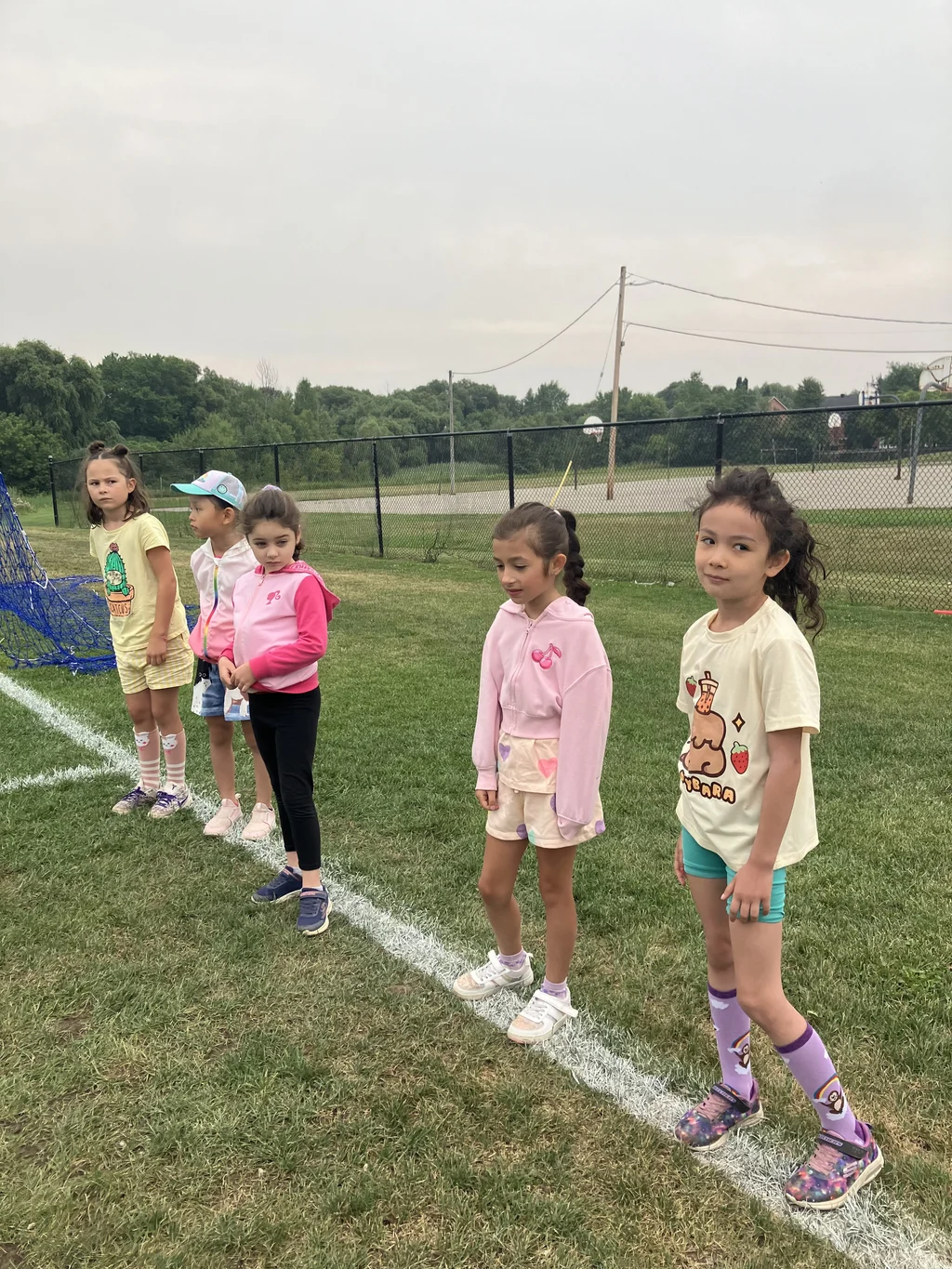
A day at camp might include:
- Morning warm-ups and team-building games on the field.
- Skill stations where campers practise throwing, catching, dribbling, or problem-solving.
- Themed challenges that tie in creativity and leadership, from relay races to team projects.
- Time for free play, where kids invent their own games with friends.
Our partnership with Rouge Gives also means more children can take part through financial assistance and inclusion support. Families looking for a Unionville summer camp that blends safety, structure, and plenty of outdoor time often tell us they appreciate that each location is directed by an experienced teacher.
Quick tips: Bringing more outdoor learning into a busy week
If your calendar is already colour-coded from top to bottom, the idea of adding “more nature time” can feel like a lot. Here’s a simple framework many families find manageable.
- The 3-2-1 formula: Aim for 3 short outdoor play blocks after school, 2 slightly longer family outings (like a park visit), and 1 bigger adventure every few weeks.
- Link outside time to existing habits: Ten minutes at the playground after pick-up, or a backyard game while dinner is in the oven.
- Dress for mess: Keep a labelled camp bag with play clothes, sunhat, and extra socks so you can say “yes” to puddles and grass stains more easily.
- Involve your child in planning: Ask, “What outdoor game do you want to teach us this weekend?” and follow their lead.
- Lean on camps: Use weeks at a trusted day camp to build a foundation of outdoor confidence your child carries back into the school year.
For more ideas that fit the Ontario school calendar, you can also browse resources from the Ontario Ministry of Education.
Key takeaways
- Learning outside supports elementary students academically, physically, and emotionally, and you’ll often see the benefits show up at home.
- Outdoor learning activities for 3-5 year olds and older children don’t need to be fancy; simple, repeatable games can make a big difference.
- Choosing a teacher-led Unionville summer camp, or similar summer camps for 4 year olds, gives young kids a safe, structured place to move, explore, and build friendships all summer long.
If you’re ready to give your child more time to move, play, and grow outside this summer, check the Rouge Camps Unionville dates and rates page, then register for the weeks that fit your family best.
FAQs
What is outdoor learning for elementary students?
Outdoor learning means using the world outside as part of a child’s learning environment. It can include nature walks, sports camp Richmond Hill activities, playground games, scavenger hunts, outdoor reading, science experiments, teamwork challenges, and creative play that help children learn through movement, curiosity, and real-world experiences.
Why is outdoor learning important for kids?
Outdoor learning helps kids build stronger bodies, better focus, confidence, independence, and social skills. When children spend time outside, they get more movement, practise problem-solving, learn how to work with others, and often return indoors calmer and more ready to learn.
What are some easy outdoor learning activities for children?
Simple outdoor learning activities include nature sorting, chalk math games, sound scavenger hunts, shadow tracing, outdoor story time, obstacle courses, backyard science experiments, and team-building games. These activities help children stay active while building curiosity, creativity, and confidence.
What are good outdoor learning activities for 3-5 year olds?
For 3-5 year olds, keep activities simple, playful, and hands-on. Colour treasure hunts, alphabet paths, water pouring stations, texture walks, weather drawing, and nature collecting are great options. At this age, the goal is to help children explore, ask questions, move their bodies, and enjoy learning through play.
How does summer camp support outdoor learning?
A good summer camp in Richmond Hill Ontario gives children regular, structured outdoor time with caring staff and age-appropriate activities. Campers build physical skills, make friends, practise teamwork, and gain confidence through games, challenges, sports, creative projects, and outdoor play.
What should parents look for in an outdoor summer camp?
Parents should look for strong supervision, small groups, teacher-led programming, safe outdoor spaces, indoor backup for weather, clear routines, and staff who understand child development. For younger children, especially 4-year-olds, a supportive and predictable environment can make camp feel exciting instead of overwhelming.