%20(1)%20(1)-1%20(1)-1-400x280.webp)
How to Choose the Best Summer Camp in Ontario for 2026
Find the best summer camp in Ontario for 2026. Our guide covers safety, costs, and top picks for day camps in Woodbridge, Richmond Hill, and Unionville.

Choosing a camp for your child can feel like a surprisingly big decision. You're lining up summer childcare, yes, but you're also picking the friends they'll make, the counsellors they'll look up to, and the stories they'll tell in September. If you're looking at summer camp ontario options for 2026, the number of choices across the GTA and York Region alone can make your head spin. The good news: with a short checklist and a few key questions, you can get from “no idea where to start” to “I feel really good about this” in an evening or two.
 A typical Ontario-style summer day camp with kids playing active games outdoors.
As a teacher-led day camp provider based in York Region, Rouge Camps talks to parents across York Region every year who want their kids to be active, safe, and genuinely excited to get out the door in the morning. Below is a practical guide to help you compare programs, whether you're thinking about an Ontario summer camp for the first time or fine-tuning plans for your seasoned camper.
TL;DR: Summer camp Ontario checklist in 5 steps
- Clarify your goals: childcare coverage, confidence, new friends, skills, or all of the above.
- Choose camp type: local day camp vs. overnight; multi-sport vs. specialty (art, robotics, etc.).
- Check safety and leadership: who runs the camp, ratios, training, and accreditation.
- Look at structure: daily schedule, screen time, outdoor play, and how they support shy or first-time campers.
- Match location and budget: pick weeks, commute, refund policies, and any financial support options.
Table of Contents
- 1. Start with your family’s goals for camp
- 2. Day, overnight, multi-sport: which Ontario camp style fits?
- 3. Safety, accreditation, and who’s in charge
- 4. Why the daily schedule matters more than the brochure
- 5. Picking a camp near Woodbridge, Richmond Hill, or Unionville
- 6. Budget, weeks, and refund policies for 2026
- 7. Key questions to ask any camp director
- 8. How Rouge Camps serves Ontario families in 2026
- 9. Quick takeaway for busy parents
1. Start with your family’s goals for camp
Before comparing websites and colour-coded calendars, ask: what do we hope camp will do for our child this summer? That answer shapes almost everything else.
Questions to ask your child
- “What sounds more fun: trying lots of different sports and games, or digging deep into one thing like art or robotics?”
- “Do you like big, high-energy groups or smaller, quieter ones?”
- “Is there something you wish you could get better at before school starts again?”
Research from camping associations across Canada points to gains in confidence, independence, and social skills as some of the most common parent-reported outcomes from camp. For example, the Western Financial Group guide to choosing the right summer camp highlights these benefits for families. When you know which of those matters most for your child right now, you can match them with a camp that actually supports that growth. It can also help to write those goals down and share them with your child so they feel part of the decision and know what to expect.
2. Day, overnight, multi-sport: which Ontario camp style fits?
Most families in York Region and the north GTA lean toward day camps: full-day programs that run Monday–Friday and get everyone home for dinner. For many kids, this local model delivers the “overnight camp feel” (cabin groups, theme days, camp-wide games) without bunk beds or homesickness.
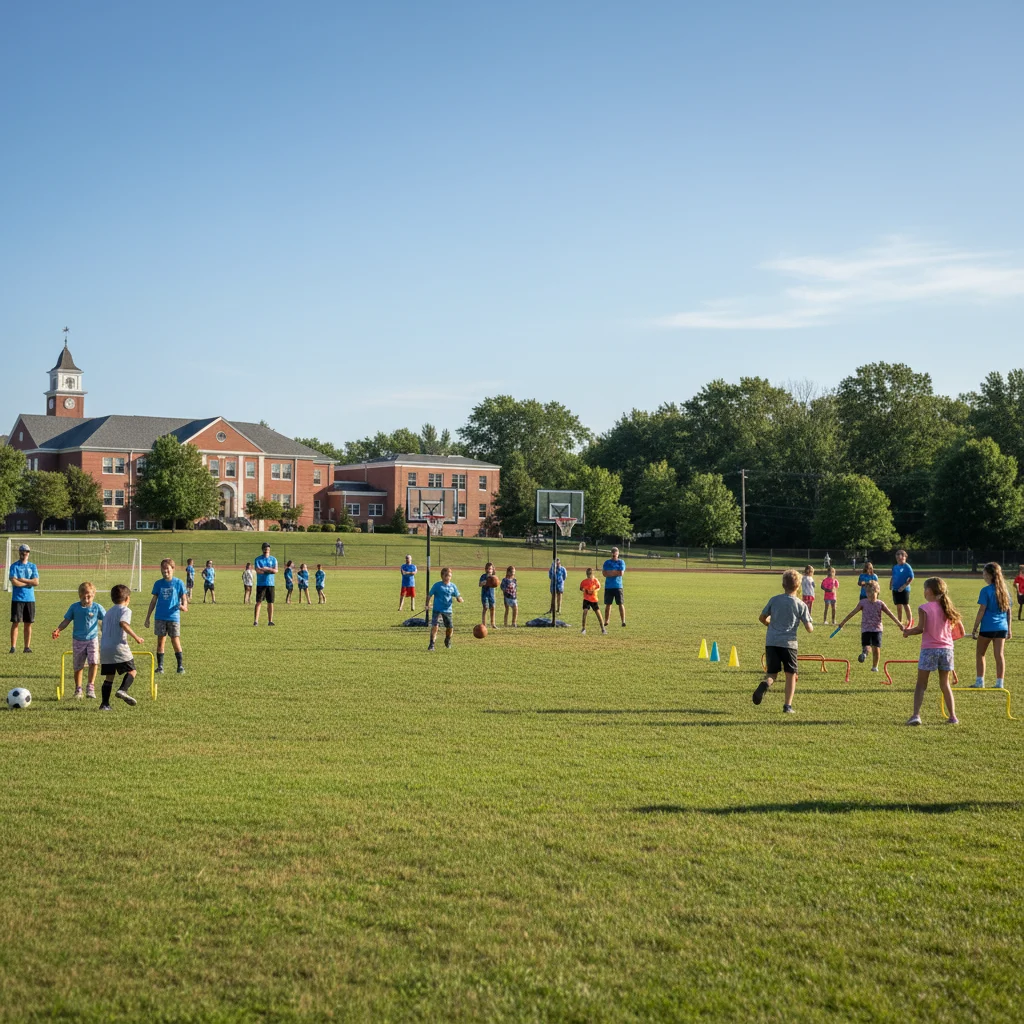 Multi-sport summer camps let kids try a variety of games and activities in one place.
Common Ontario summer camp formats
- Multi-sport day camps – Great for ages 4–13 who like to move but aren’t set on one sport yet. At Rouge Camps Sports Camp, for instance, campers rotate through a mix of sports, cooperative games, and skill sessions.
- Specialty camps – Focused on one area (art, robotics, drama, coding). Rouge’s ROUGE-botics and Art Camp programs are examples for ages 8–13.
- Leadership-in-Training (LIT) – Programs for teens 13–15 who are ready for responsibility and mentoring, like Rouge Camps’ Leadership-in-Training option.
- Overnight camps – Best for older campers who are ready to be fully away from home for a week or more.
If your child is under 10 or tends to recharge at home, a structured day camp in your community is often a gentle step that still feels like a big adventure. If you’re still unsure, start with a week or two at a nearby day camp and see how your child responds before committing to a longer or more specialized option.
3. Safety, accreditation, and who’s in charge
Once you know the general camp style, look closely at leadership and safety. This is where camps can look similar on paper but feel very different in real life.
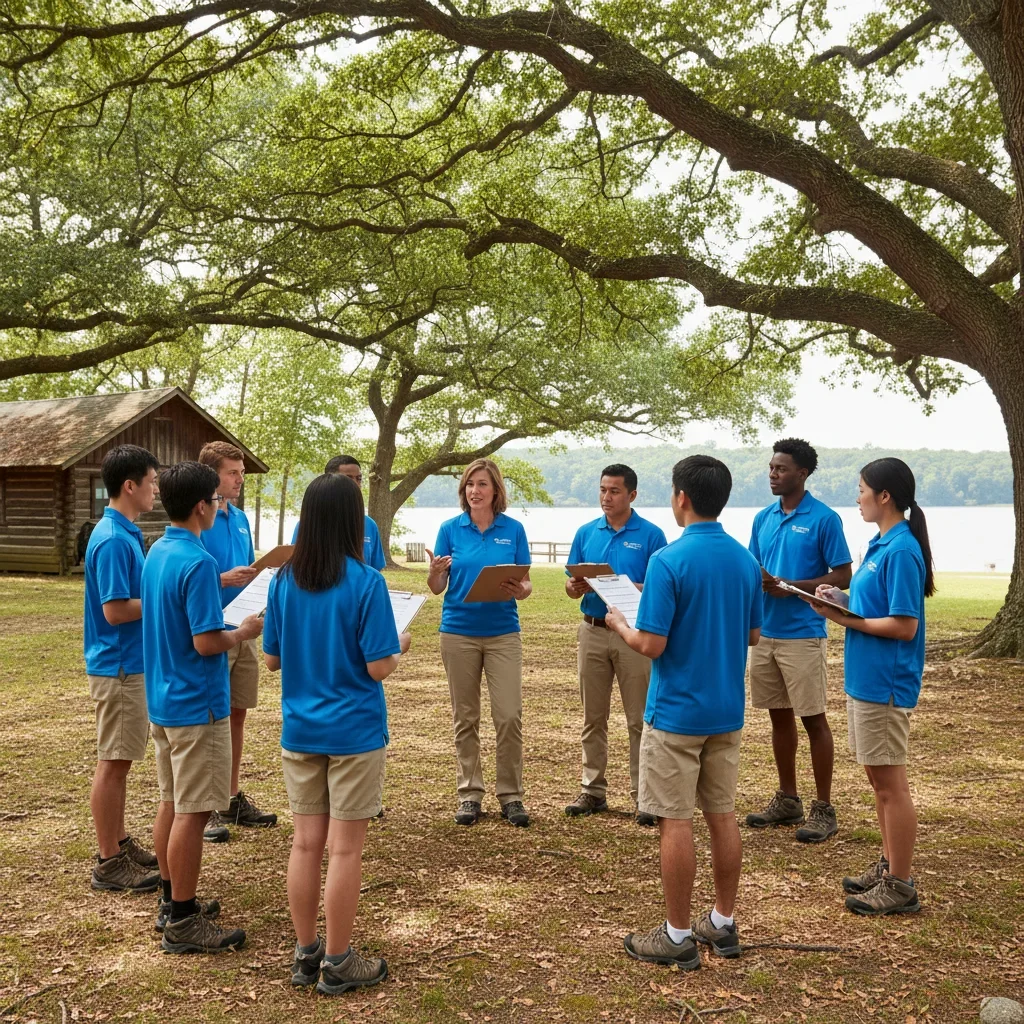
Strong camp leadership and staff training are key to safety and a positive camper experience.
Accreditation and standards
In Ontario, many reputable camps choose to be accredited by the Ontario Camps Association (OCA) or similar bodies. The Ontario Camps Association guide to choosing a camp explains additional standards around site, safety, leadership, health, food service, and program quality that go beyond basic provincial requirements.
Why “who’s in charge” really matters
Ask directly: Who is the on-site director, and what is their background? At Rouge Camps, for example, each location is directed by an Ontario-certified teacher with experience running school programs and student activities. That kind of background usually means:
- Clear behaviour expectations and positive discipline strategies.
- Thoughtful grouping by age and ability.
- Well-planned daily schedules (not “winging it”).
- Good communication with parents before and during camp.
Guides from the OCA and national safety organizations, including the Ontario Camps Association guide to choosing a camp, encourage parents to ask about staff screening, training, emergency procedures, and how medical needs are handled. If you feel brushed off or get vague answers, that’s a sign to keep looking. A five-minute conversation about ratios, training, and emergency plans will tell you far more about a camp’s culture than any flyer or social media post.
“You should feel just as comfortable with the camp director’s judgment as you do with leaving your child with a trusted teacher.”
4. Why the daily schedule matters more than the brochure
Two camps can offer “sports and games” yet give your child completely different days. Ask for a sample schedule and look for:
- Active time vs. sitting time – Is your child moving for most of the day?
- Outdoor play – How much time is outside, and what’s the plan on hot or rainy days?
- Screen use – Is camp phone-free for campers?
- Transitions – Are there smooth handoffs between activities, lunch, and pick-up?
- Support for shy or first-time campers – How do they help kids who are nervous or slow to warm up?
A clear, structured schedule usually means your child comes home tired in a good way, not frazzled from chaos.
5. Picking a camp near Woodbridge, Richmond Hill, or Unionville
Location is more than “how long is the drive?” It shapes whether camp mornings feel calm or frantic, and whether your child can still enjoy evening activities or sports.
Summer camp for kids in Woodbridge
If you’re searching for a summer camp for kids in Woodbridge, look for programs that are close to your daily routes to work or errands. A local day camp like Rouge Camps Woodbridge keeps commute time down and gives kids a chance to bump into camp friends at the park or arena later in the year.
Summer camp for kids in Richmond Hill
Families choosing a summer camp for kids in Richmond Hill often juggle younger siblings and work in different parts of the GTA. A central spot such as Rouge Camps Richmond Hill/Maple can make drop-off and pick-up predictable, especially if both parents are working full-time.
Summer camp for kids in Unionville
For a summer camp for kids in Unionville, many parents like programs based at familiar local schools or community hubs. The Rouge Camps Unionville site, for instance, attracts campers from Markham, Angus Glen, and surrounding neighbourhoods, which helps friendships carry into the school year.
Wherever you live, map out the drive at real pick-up time, think about parking, and check whether siblings of different ages can attend the same camp.
6. Budget, weeks, and refund policies for 2026
Ontario summer camp fees vary widely, especially once you compare single-week bookings, multi-week discounts, and extended care. To keep surprises away, look at:

Review your calendar, weeks, and budget together before registering for summer camp in Ontario.
- Total summer cost – Multiply your per-week rate by the number of weeks you realistically need.
- Extended care – If you need early drop-off or late pick-up, check exact times and fees.
- Refunds and credits – What happens if your plans or your child’s needs change?
- Payment plans – Can you spread payments across spring and early summer?
Non-profits such as the Kids in Camp financial assistance program for parents and campers offer “camperships” to help families send children to accredited Ontario camps, including the 2026 season. Rouge Camps also supports access through its own Rouge Gives charity, which helps with fee subsidies and inclusion support weeks.
Spots at popular weeks (especially the first week of July and last week of August) often go first, so registering by late winter or early spring 2026 gives you the best choice of dates. Building camp fees into your annual family budget, alongside sports, lessons, or childcare, can make registration season feel more manageable and reduce the pressure to make last-minute decisions.
7. Key questions to ask any camp director
Once you’ve narrowed your list to two or three camps, a short call or visit with the director can tell you more than hours of browsing. Parent guides from the Ontario Camps Association and other experts, such as the Ontario Camps Association guide to choosing a camp, strongly encourage these direct conversations. Here’s a quick script you can adapt:
Program and philosophy
- “How do you help new or shy campers feel included in the first few days?”
- “What does a great day at camp look like for you as a director?”
- “How do you handle conflicts or unkind behaviour between campers?”
Staff and safety
- “Who supervises staff day-to-day? What training do they receive before camp starts?”
- “What are your camper-to-staff ratios for my child’s age?”
- “How do you handle first aid, allergies, and medication?”
Communication and logistics
- “How will you contact me if my child is having a tough day?”
- “What should my child bring each day, and what should stay at home?”
- “If we need to change or cancel a week, what options do we have?”
By the end of that conversation, you should have a clear sense of whether the camp’s values line up with yours.
8. How Rouge Camps serves Ontario families in 2026
Rouge Camps was founded in 2013 by two Ontario high school Physical Education teachers who wanted to bring that “sleepaway camp feeling” into local school gyms and fields. Today, Rouge operates teacher-led day camps in Unionville/Markham, Richmond Hill/Maple, and Woodbridge for campers ages 4–15.
What many parents like most is the mix of structure and fun:
- Teacher-directed leadership – Each site is led by an Ontario-certified teacher who oversees programming, safety, and staff coaching.
- Active, mostly outdoor days – Multi-sport blocks, camp-wide games, and theme days keep kids moving and engaged.
- Choice and variety – From core Sports Camp to ROUGE-botics, Art Camp, and Leadership-in-Training, there’s room for different personalities.
- Inclusion support – Through Rouge Gives, some campers receive fee subsidies or 1:1 support weeks, helping more kids experience camp.
If you’re in York Region and want that “big camp energy” without leaving town, Rouge Camps can be your family’s home base for summer 2026.
9. Quick takeaway for busy parents
When you strip away the glossy photos, choosing an Ontario summer camp in 2026 comes down to this:
- Pick a camp style that fits your child’s age, interests, and comfort level.
- Trust your gut about the director and leadership team.
- Check safety, structure, and communication as closely as you check cost.
- Choose a location and schedule that make family life easier, not harder.
Do that, and you’ll send your child into July with a backpack full of sunscreen and a summer full of stories waiting to happen.