%20(1)%20(1)-1%20(1)-1-400x280.webp)
10 Reasons Why a Youth Sports Camp Is the Best Option for Your Kids
Discover why a youth sports camp is the best choice for summer. Learn how multi-sport play builds confidence, skills, and social ties for kids in Ontario.
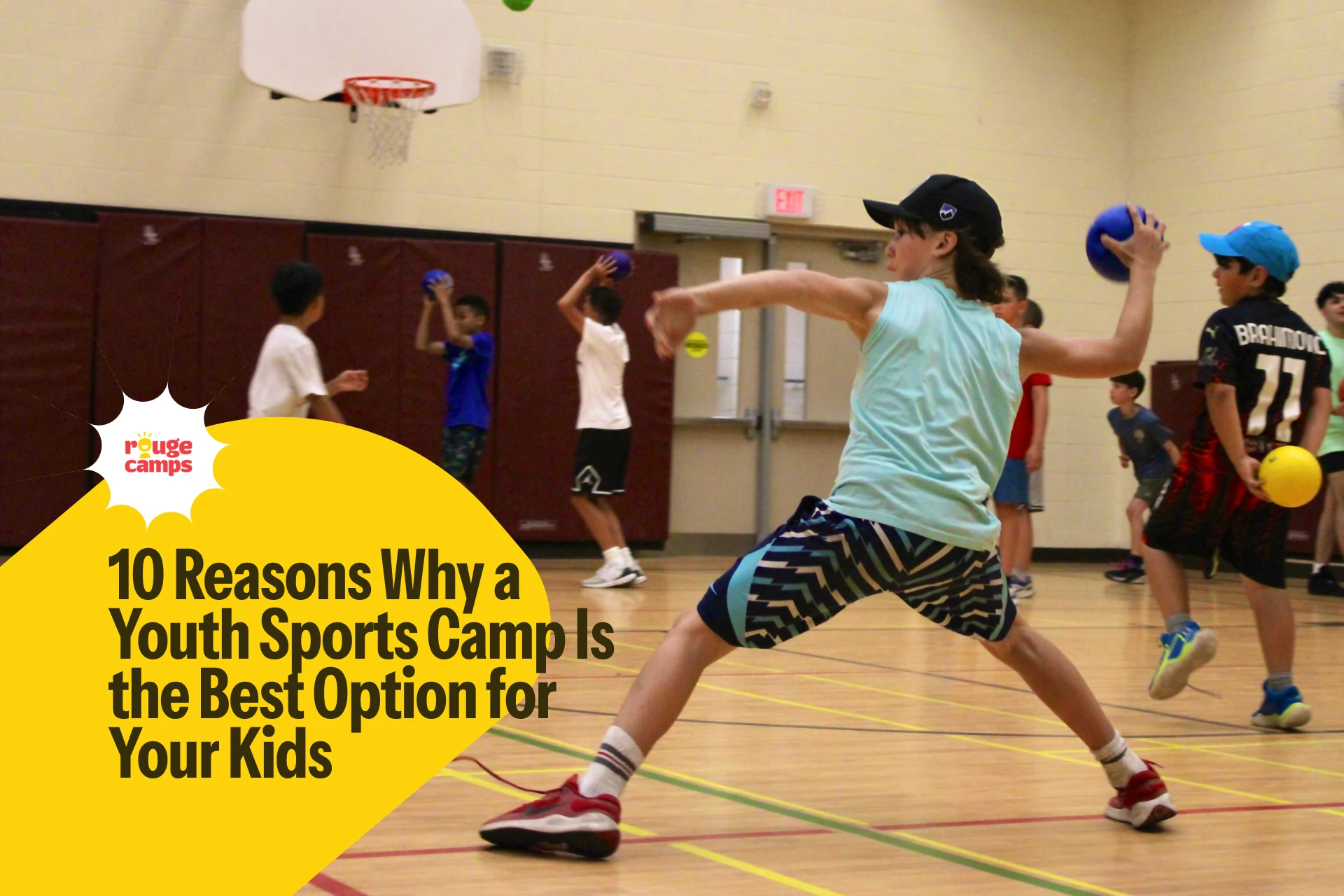
Youth sports camp days often mean hours of active play, fresh air, and skill-building with supportive coaches.
If you're a parent in York Region, summer can feel like a giant puzzle. You want your kids to be active, safe, and happy, but you also have work, commutes, and a calendar that fills up faster than you can say June.
 At a youth sports camp, kids trade extra screen time for running, games, and unstructured outdoor fun.
That’s why so many families are looking at a youth sports camp as their summer “home base” instead of juggling a different program every week.
In this guide, we’ll walk through ten big reasons this type of camp tends to be the sweet spot for both kids and parents, especially here in Markham, Richmond Hill, Vaughan, and Woodbridge, and how a youth sports camp can support your whole family’s summer, not just fill daytime hours.
TL;DR: Why a sports-focused summer makes sense
- Kids get daily movement, skill-building, and fresh air instead of extra screen time.
- Multi-Sport Camps offer variety without pressure to “pick one sport forever.”
- Teacher-led programs give you peace of mind around safety, structure, and behaviour.
- Friendships, confidence, and independence grow in ways that are hard to recreate at home.
- One reliable camp “home base” keeps family logistics and stress under control.
Table of contents
- 1. Daily active play instead of all-day screens
- 2. Multi-Sport Camp exposure beats early specialization
- 3. Safe, structured days while you’re at work
- 4. Confidence through visible progress
- 5. Real friendships and social skills
- 6. Teacher-led leadership and role models
- 7. Youth sports camping that still feels like “real camp”
- 8. Independence in a supervised setting
- 9. Easier logistics for busy families
- 10. Memories, traditions, and values that last
- Quick benefits snapshot
- Common questions parents ask
- How to choose the right sports camp
1. Daily active play instead of all-day screens
Between homework, streaming, and games, sitting has quietly become the default for many kids.
At a well-run sports camp, movement is the default. Kids run, jump, throw, catch, and play for hours each day, and it feels like fun, not a workout. That kind of regular activity supports:
- Stronger hearts, muscles, and bones
- Better sleep and more stable moods
- Improved focus when school starts again
Health organizations like the Public Health Agency of Canada and the World Health Organization recommend that children and youth aged 5 to 17 get at least an average of 60 minutes of moderate-to-vigorous physical activity every day.
Federal data show that currently only about 38% of this age group meets that recommendation, so most kids are falling short of healthy movement targets. A quality camp schedule, with multiple play blocks built into every day, makes it much easier for your child to hit those guidelines almost by accident, just by having fun with their friends.
2. Multi-Sport Camp exposure beats early specialization
It can be tempting to put your child in one sport year-round, especially if they seem to “show promise.” But research and most coaches agree: before the teen years, variety wins.
In a Multi-Sport Camp like the Rouge Camps Sports Camp, campers rotate through a mix of activities, soccer, basketball, flag football, cooperative games, and more. That mix helps them:
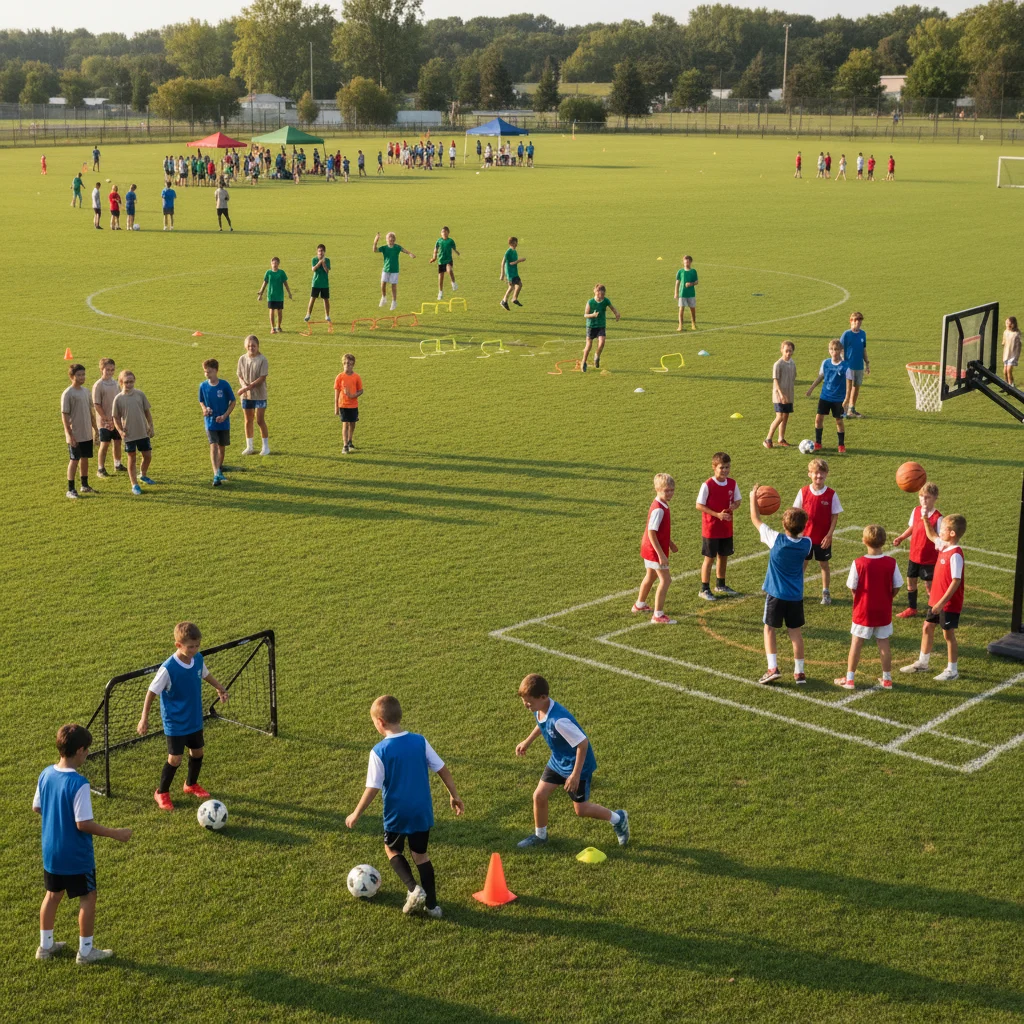 Multi-sport youth camps let kids sample many activities in one place before they ever need to specialize.
- Develop a wide base of physical skills
- Discover what they truly enjoy, not just what they’re used to
- Avoid over-use injuries that can come from doing one motion all year long
Later on, if they choose to focus on a particular sport, they’ll do it with better coordination, balance, and body awareness.
3. Safe, structured days while you’re at work
For many families, summer is full-time work plus a childcare puzzle, so they need a predictable 9–4 (or later) plan.
A good youth program doesn’t just entertain kids; it gives the day a clear rhythm. At Rouge Camps, for example, teacher-led directors build schedules that balance:
- High-energy sports blocks
- Cool-down and shade breaks
- Snack and lunch times
- Camp-wide games and theme activities
That structure helps children feel secure, and helps parents focus at work, knowing the day is supervised by Ontario-certified teachers, not left to chance.
4. Confidence through visible progress
Kids don’t need to win trophies to feel proud; small improvements they can see and feel matter more.
Sports camps are full of those “micro-wins”:
- The first time a camper serves the ball over the net
- Finishing a relay without stopping
- Learning a new move in a game they’d never tried before
When counsellors and teacher-directors name those wins out loud, “You stuck with that drill even when it was hard”, kids start to see themselves as capable, and that mindset carries back into classrooms, music lessons, and everyday life.
“Our 5-year-old came home from Rouge Camps every day proud of a new skill and a little more confident and independent.”
5. Real friendships and social skills
One of the quiet gifts of camp is how it nudges kids out of their usual circles to meet new friends and learn to work together on the field.
In a well-facilitated setting, sports become a training ground for:
- Taking turns and sharing equipment
- Handling both winning and losing with grace
- Supporting teammates instead of blaming them
Organizations like the Canadian Paediatric Society highlight how sport can support social and emotional development when adults set the tone well, that’s where experienced, educator-led staff really shine.
6. Teacher-led leadership and role models
“Who’s in charge?” is one of the most important questions you can ask any camp director.
At Rouge Camps, each location is led by an Ontario-certified teacher. That means the person setting expectations, training staff, and managing behaviour understands child development, classroom management, and safety procedures.
Rouge Camps also invests heavily in staff, selecting counsellors carefully and bringing them together for an intensive Staff Training Conference before campers arrive, so those role models are prepared to support kids on and off the field.
 Strong role models and clear leadership at youth sports camp help kids feel safe, supported, and motivated.
When camp is led by teachers, parents get school-level structure with all the fun and connection of summer camp.
On top of that, older campers can step into leadership roles through programs like Leadership-in-Training (LIT). They learn how to:
- Support younger campers with patience
- Lead warm-ups and simple games
- Communicate clearly with peers and adults
Those are the same skills that show up later in job interviews, group projects, and community leadership.
7. Youth sports camping that still feels like “real camp”
Some parents worry that a sports-focused program will feel like school gym class all summer, but done well, youth sports camping still has all the magic of traditional camp:
- Theme days, colour wars, and camp-wide challenges
- Team chants, silly traditions, and spirited counsellors
- Moments of rest and reflection between all the movement
Rouge Camps brings that “overnight camp feel” to a neighbourhood day camp, so kids go home buzzing with stories from the day.
8. Independence in a supervised setting
Summer is a great time for kids to stretch their independence a bit. At camp, they remember their own water bottle, listen for the whistle, solve small conflicts, and move between activities with their group.
All of that happens with a safety net: trained staff, clear rules, and a secure environment. For many children, it’s the perfect bridge between being fully supervised and the more independent world of middle school and beyond.
9. Easier logistics for busy families
Let’s be honest: a big part of this decision is practical. Driving to one place all summer is very different from switching locations every week.
Choosing a consistent program, like Rouge Camps’ multi-week Sports Camp in Unionville, Richmond Hill/Maple, or Woodbridge, means:
- One pick-up and drop-off routine to learn
- One set of dates, times, and contact numbers to remember
- Less scrambling to line up Plan B childcare
For dual-working households, that kind of predictability is worth a lot. A summer camp in Richmond Hill Ontario that runs for multiple weeks can become your family’s steady anchor, even if you add on a few specialty weeks elsewhere.
10. Memories, traditions, and values that last
Ask most adults about their childhood summers, and they’ll tell you about “that camp” or “that coach” who made a difference.
Great camps use sport to teach bigger things:
- Resilience: “I can try again tomorrow.”
- Teamwork: “We’re better when everyone is included.”
- Character: “We shake hands, even when we’re frustrated.”
At Rouge Camps, that shows up in how staff talk to campers, how games are framed, how conflicts are handled, and, through our partnership with Rouge Gives, in a commitment to inclusion and making camp accessible for more families.
Quick benefits snapshot: kids, parents, community
A well-designed youth sports camp supports kids, parents, and the wider community:
Kids’ benefits | Parents’ benefits | Community benefits |
|---|---|---|
Daily active play, skill-building, growing confidence | Reliable care that fits work hours | Healthier, more active local kids |
New friends, role models, leadership practice | Consistent routines, fewer childcare changes | Seasonal jobs and leadership for local youth |
Common questions parents ask
What age is best for a youth sports camp?
Most programs welcome campers starting around age 4 or 5, right up through early teens. At Rouge Camps, our core Sports Camp typically serves ages 4–13, with dedicated LIT programs for teens 13–15.
How is a Multi-Sport Camp different from a single-sport clinic?
A single-sport clinic focuses on one game (say, soccer) and aims to sharpen skills in that area only. A Multi-Sport Camp introduces campers to many activities over the week, which is ideal if:
- Your child is still figuring out what they love
- You want a balance of fun, fitness, and variety
- You’d like them to build general athletic skills before specializing
What if my child isn’t “sporty”?
A good sports camp Richmond Hill option is for kids of all ability levels, not just competitive athletes. At Rouge Camps, counsellors focus on effort, teamwork, and fun, not on who scores the most points, so many kids who “don’t like sports” at school discover they actually like moving once the pressure is off.
How to choose the right sports camp
Before you register anywhere, here are a few questions worth asking any camp director:
- Who is the on-site director, and what is their background?
- What does a typical day look like from arrival to pick-up?
- How are staff trained to handle behaviour, injuries, and extra support needs (for example, 1:1 support or subsidies)?
- What’s your rainy-day or extreme-heat plan so kids still have a safe, fun day?
- How do you communicate with parents during the day (for updates, photos, or if there’s an issue)?
As you compare options, you can also use a quick “3S Test” to see whether a program is a good fit for your family.
The 3S Test: Safe, Structured, Social
- Safe: Look for clear check-in and check-out procedures, background checks, first-aid training, and sun/heat safety plans.
- Structured: Ask to see a daily schedule. There should be a balance of high-energy games, water breaks, cool-down time, and quieter activities.
- Social: Find out how staff help new campers feel included through icebreakers, group placements, and support for shy or anxious kids.
You can find many of these answers on the Rouge Camps website, including details on locations, programs, and our partnership with Rouge Gives for fee subsidies and inclusion support.
For general safety guidelines, the Province of Ontario and health agencies such as the Government of Ontario share helpful resources on outdoor play, heat safety, and child programs.
Key takeaway for parents
Daily activity, variety through a Multi-Sport Camp model, strong role models, friendships, independence, and simpler logistics add up to a great summer for kids and more breathing room for parents. If you’re in Markham, Unionville, Richmond Hill, Maple, Woodbridge, or looking for a trusted summer camp North York option, we’d love to host your family at Rouge Camps.
Or learn more about our locations in Unionville, Richmond Hill/Maple, and Woodbridge.